
I have been advising boards, regulators and operators on consequential decisions for nearly fifty years. In that time I have read hundreds of books about how people decide, how organisations fail, and why smart people do predictably stupid things under pressure. Most of those books were not worth the paper.
The lists you find online recycle the same ten titles. Thinking, Fast and Slow. Nudge. Predictably Irrational. Those are fine books, but they are about psychology, not about making a specific decision when something real is at stake. The books below are different. They changed how I think about the work I do: helping people decide under uncertainty, with consequences, when there is no formula and no consultant who can do it for them.
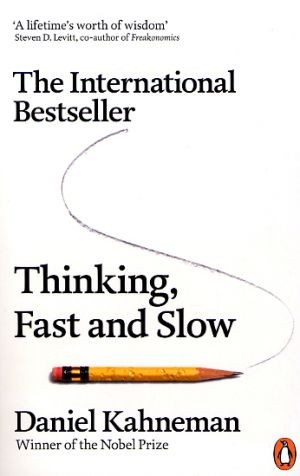
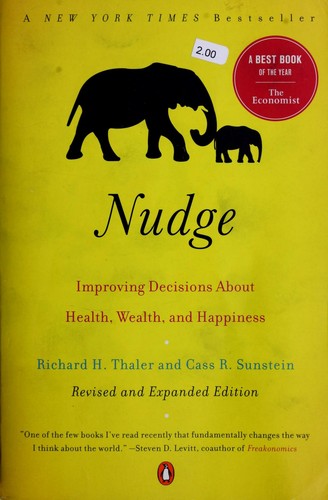

Some are famous in narrow circles and unknown outside them. Several are out of print. None of them will tell you what to decide. What they will do, if you read them carefully, is make visible the patterns that cause decisions to go wrong, and the habits that keep good decision-making invisible until it fails.
When systems fail
The first group of books shares a common argument: complex systems produce failures that no single person caused and no checklist prevents. If you work in any organisation with multiple layers, interdependencies and time pressure, these are not optional reading. They are the foundation.
Normal Accidents
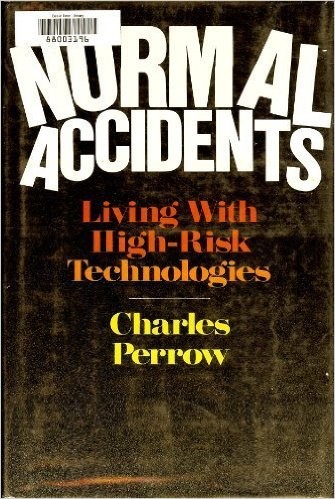
Perrow's argument is simple and, once you absorb it, impossible to forget. In systems that are both tightly coupled and complex, accidents are not anomalies. They are normal. The system's own structure guarantees them. Three Mile Island, chemical plants, marine transport, nuclear weapons: Perrow walks through each and shows the same pattern. Components interact in ways nobody anticipated, and the tight coupling means there is no time or slack to recover.
This was the first book that made me question the entire premise of risk management as most organisations practise it. The standard approach assumes you can identify the hazards, estimate the likelihoods, and put controls in place. Perrow demonstrates that in tightly coupled systems, the interactions that produce failure are not identifiable in advance, because they emerge from the system's complexity rather than from any individual component. That is a fundamental challenge to the control-based worldview, and most risk practitioners have never engaged with it.
The book is dense in places and the examples are dated, but the core argument has only become more relevant as systems have grown more interconnected. If you manage anything with moving parts and dependencies, read this before you sign off on another risk register.
The Challenger Launch Decision
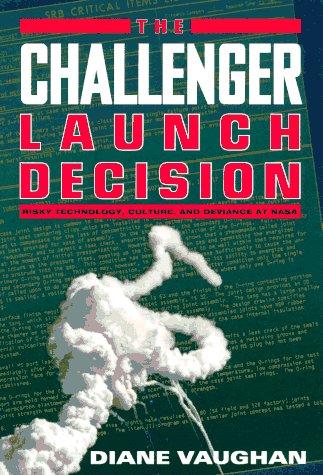
Everyone knows the O-rings failed. Vaughan spent nine years investigating something more important: how the people who knew about the O-ring problem came to treat it as acceptable. She calls it the normalisation of deviance. Each small departure from the original design specification was absorbed into the working culture until what had been unacceptable became routine. Nobody made a dramatic decision to ignore the evidence. The evidence was reclassified, meeting by meeting, memo by memo, until the risk was no longer visible as a risk.
This is the book I return to most often when I see organisations drifting. The pattern Vaughan documents is not unique to NASA. It operates in every organisation where incremental compromise is easier than confronting the gap between what the rules say and what the practice is. The deviance is never a single dramatic act. It is a series of small accommodations, each of which seems reasonable in its local context, until the accumulated distance from the original standard is lethal.
If you are responsible for any decision process that involves standards, tolerances or thresholds, this book will show you how those thresholds migrate without anyone noticing. It is uncomfortable reading for anyone who writes policies and assumes they are followed.
Drift into Failure

Dekker extends the argument that Perrow and Vaughan opened. His claim is that complex systems do not fail because of a single broken component. They drift into failure gradually, through a sequence of locally rational decisions that cumulatively move the system toward its boundary. Each step makes sense to the person taking it. The drift is imperceptible from inside.
What makes this book valuable for decision-makers is the implication for accountability. If failure emerges from drift rather than from a discrete bad decision, then the conventional approach of finding the person who made the mistake and punishing them is not just unfair. It is incoherent. The failure does not belong to any individual decision. It belongs to the trajectory.
Dekker writes clearly and the book is shorter than Perrow's. If you only read one book on systems failure, this would be a reasonable choice, though I would push you toward Perrow first for the theoretical foundation and Vaughan for the evidence.
Friendly Fire
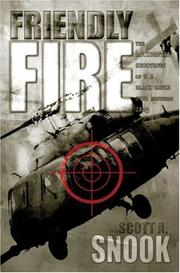
On 14 April 1994, two US Air Force F-15s shot down two US Army Black Hawks over northern Iraq, killing all 26 people aboard. The Black Hawks were operating in an established no-fly zone, following procedures, squawking the correct codes. Multiple safeguards were in place. None of them worked.
Snook's investigation is meticulous. He shows that no single failure explains the shootdown. Every individual actor behaved in ways that were locally reasonable. The AWACS crew, the F-15 pilots, the helicopter crews, the chain of command: each operated within their own frame, and the frames did not connect. Snook calls it practical drift, a concept closely related to Vaughan's normalisation of deviance but applied to the gap between procedures and actual practice across organisational boundaries.
This is an essential book for anyone who designs decision processes that span multiple teams, functions or organisations. The failure was not a failure of individuals. It was a failure of coupling: the systems that were supposed to connect different actors had degraded through routine, without anyone noticing, until the moment they were needed and were not there.
Human Error
Reason's Swiss cheese model is probably the most widely used mental model in safety science, and most people who cite it have never read the book it came from. The model is simple: defences against failure are like slices of Swiss cheese, each with holes. Failure occurs when the holes align. But the book is far richer than the model. Reason provides a taxonomy of error types, distinguishes slips from mistakes from violations, and explains why well-intentioned people produce predictable failures in predictable patterns.
What I took from this book, decades ago, was the distinction between active failures and latent conditions. Active failures are the visible errors at the sharp end: the pilot who misreads the altimeter, the surgeon who nicks an artery. Latent conditions are the invisible decisions made months or years earlier at the blunt end: the budget cut, the staffing choice, the design compromise. By the time the active failure occurs, the latent conditions have already determined whether the system can absorb it or not.
If you make decisions that set conditions for other people's work, this book will change how you think about your role in failures that have not happened yet.
History's verdicts
History does not repeat, but decision failures do. These three books examine specific moments where the evidence was available, the decision-makers were competent, and the outcome was still catastrophic. The value is in the mechanism, not the narrative.
Pearl Harbor: Warning and Decision
Wohlstetter's book is the original study of intelligence failure, and it remains the best. Her argument is that the problem at Pearl Harbor was not a lack of information. The signals were there. The problem was noise: the volume of irrelevant information that made the relevant signals invisible. The question was never "did we have the data?" It was "could anyone have distinguished the signal from the noise in real time?"
This framing has stayed with me throughout my career. Most decision failures I have encountered were not failures of information. They were failures of attention. The organisation had the data somewhere, often in multiple places, but the data that mattered was buried in the data that did not. Wohlstetter showed this pattern sixty years ago, and it has not changed. If anything, the explosion of data and analytics has made the problem worse, because the noise now arrives with the authority of a dashboard.
The book is academic in style but rewards patience. It is the foundation for everything that came after in the study of surprise, warning and decision under ambiguity.
The March of Folly
Tuchman's question is pointed: why do governments pursue policies that are visibly contrary to their own interests, when alternatives are available and contemporaries are pointing out the error? She examines four cases: Troy accepting the wooden horse, the Renaissance Popes provoking the Reformation, Britain losing the American colonies, and America in Vietnam. In each case, the decision-makers had access to contrary evidence, chose to ignore it, and persisted long past the point where the policy had demonstrably failed.
The book is written for a general audience, which makes it accessible but also means the analytical framework is lighter than Wohlstetter's or Vaughan's. What it does well is demonstrate that folly is not stupidity. The people making these decisions were experienced, informed and, by the standards of their time, competent. The failure was not cognitive. It was structural: the decision environment rewarded commitment to the existing course and punished the people who argued for change.
I recommend this to anyone who sits in an organisation where changing direction feels harder than continuing. That is most organisations.
The Making of the Atomic Bomb
This is not a decision-making book in the conventional sense. It is a history of the Manhattan Project, and it is one of the finest pieces of narrative nonfiction written in the twentieth century. But it belongs on this list because it documents, in extraordinary detail, the chain of decisions made under conditions of radical uncertainty by scientists, military officers and politicians who understood that the consequences of being wrong were civilisational.
What struck me when I first read it was the variety of decision styles operating simultaneously. Oppenheimer managed by instinct and charisma. Groves managed by control and compartmentalisation. The scientists debated in seminar rooms while the engineers poured concrete. Each group operated with different information, different values and different conceptions of what "enough certainty" meant. The bomb was built not because anyone had a complete picture but because the pieces were assembled by people who each understood their own piece well enough to act.
Read it for the decision-making under pressure, not for the physics. The moral reasoning alone, particularly the debate about whether to demonstrate the bomb before using it, is worth the price of the book.
How experts actually think
Most models of decision-making assume people weigh options and calculate outcomes. These three books show what actually happens when experienced people decide under pressure, ambiguity and organisational complexity. The picture is not flattering, but it is useful.
Sources of Power
Klein studied how people actually make decisions in high-pressure environments: firefighters, intensive care nurses, military commanders. What he found contradicted the standard model. Experts do not generate a set of options and then compare them. They recognise patterns, run a mental simulation of the first option that fits, and act. If the simulation reveals a problem, they modify or discard it and try the next. Klein calls this recognition-primed decision-making.
This book changed how I think about expertise. The traditional advice to "consider all your options" is appropriate for novel, low-pressure decisions. For experienced people facing familiar categories of problems under time pressure, it is not only unnecessary but counterproductive. The expertise is in the pattern recognition, not in the analysis. What Klein documents is that good decision-makers spend their time building and testing mental models, not generating spreadsheets.
The practical implication is significant: if you want better decisions in your organisation, invest in developing pattern recognition through experience and debriefing, not in building more elaborate analytical frameworks. Most organisations do the opposite.
Expert Political Judgment

Tetlock tracked the predictions of 284 experts across twenty years and found that their forecasts were barely better than chance. The more famous the expert, the worse the predictions. Television pundits performed worst of all. The study is methodologically rigorous and the findings are devastating for anyone who relies on expert opinion to make consequential decisions.
The distinction Tetlock draws between foxes and hedgehogs is the lasting contribution. Hedgehogs know one big thing and apply it everywhere. Foxes know many small things and adjust. Foxes outperformed hedgehogs consistently, not because they were smarter but because they were willing to update their views when the evidence changed. Hedgehogs defended their positions regardless.
I have watched this pattern play out in boardrooms for decades. The person with the strongest conviction and the most confident manner tends to dominate the room, and their track record is rarely examined. Tetlock provides the data to challenge that dynamic. If you commission expert advice as part of your decision process, this book will change how you weight it.
Sensemaking in Organizations
Weick's argument is that people do not first understand a situation and then act. They act, and then construct an understanding of what they did and why. Sensemaking is retrospective: you make sense of what happened after it has happened, and that sense then shapes what you do next. This sounds abstract until you apply it to an organisation in crisis and realise that the standard assumption, that people understood the situation and then made a bad decision, is usually wrong. They were constructing their understanding of the situation in real time, and the decision was part of that construction, not a response to it.
The Mann Gulch fire case in this book (which Weick analysed before Maclean's book below reached its audience) is one of the most powerful illustrations I know of what happens when sensemaking collapses. The firefighters' understanding of the situation disintegrated, and with it their capacity to act as a group. The foreman survived because he invented a new frame, an escape fire, in the moment. Nobody followed him because the new frame was incomprehensible within their existing understanding.
This book is harder going than the others on this list. It is worth the effort if you manage people through ambiguity, which is to say, if you manage people at all.
When the map replaces the territory
These two books examine what happens when the model you are using to understand reality stops representing it. Both show how planning frameworks, risk models and administrative systems can become substitutes for the thinking they were supposed to support.
Seeing Like a State
Scott's subject is high-modernist planning: the belief that society can be rationally ordered from above if you have enough data and enough authority. He examines Soviet collectivisation, Tanzanian villagisation, Brasilia, and scientific forestry, and in each case shows the same failure. The planners created simplified models of complex realities, mistook the models for the realities, and then imposed the models with catastrophic results. The local knowledge that would have corrected the models was precisely what the planning process destroyed.
I return to this book whenever I encounter an organisation that has built an elaborate governance framework and is surprised that the framework does not produce good decisions. The framework is the simplified model. The local knowledge, the judgment of the people closest to the work, is what the framework was supposed to capture, and is usually what it displaces. Scott calls this metis: practical, situated knowledge that cannot be formalised. Every decision framework, including the one I helped develop, is at risk of this substitution if it stops being a tool and starts being the authority.
The book is long and occasionally repetitive. Read the first four chapters and the conclusion. That is where the argument lives.
The Logic of Failure
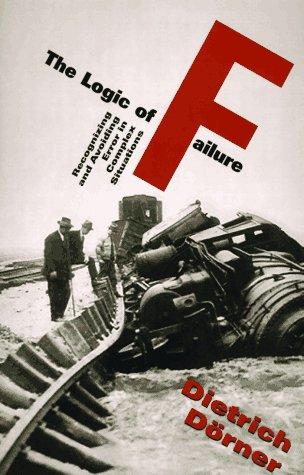
Dörner ran computer simulations in which participants managed fictional complex systems: a small town, a developing country, a factory. The systems were dynamic, interconnected and opaque, which is to say, they behaved like the real systems most of us manage. The participants, including experienced professionals, made the same mistakes repeatedly. They focused on the most visible problem and ignored the rest. They failed to account for side effects. They did not monitor the consequences of their actions. They treated complex, dynamic systems as though they were simple and static.
The value of this book is that the failures are experimental, not anecdotal. Dörner can show you the precise moment when each participant's mental model diverged from the system's behaviour, and why. The patterns are consistent across participants and scenarios: over-steering, neglecting feedback, fixating on single variables, and confusing activity with progress.
If you manage anything with multiple interacting parts and delayed consequences, this book will make you uncomfortable. That discomfort is useful. The alternative is discovering the same patterns in your own decisions, with real consequences.
The ones that don't fit anywhere
These last two books do not belong to any school of decision research. One is a literary reconstruction of a disaster. The other is a quiet study of institutional resistance to evidence. Both illuminate something about how decisions work that the academic literature misses.
Young Men and Fire
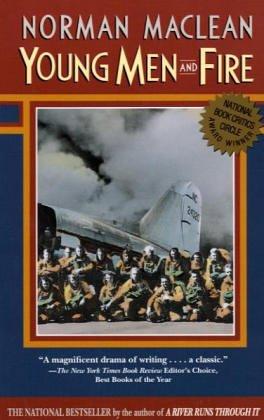
On 5 August 1949, fifteen smokejumpers parachuted into Mann Gulch, Montana, to fight what they thought was a routine forest fire. Within two hours, thirteen of them were dead. Maclean, who was in his eighties when he wrote this, spent the last decade of his life reconstructing what happened. The book was published after his death.
What makes this essential reading for anyone interested in decisions is Maclean's focus on the moment of crisis. The foreman, Wag Dodge, realised the fire had turned and that the crew could not outrun it. He did something nobody had ever done before: he lit an escape fire, lay down in its ashes, and let the main fire pass over him. He survived. His crew, running uphill toward the ridge, did not. They could not understand what he was doing. The instruction made no sense within their existing frame, so they ignored it.
This is not a book about fire management. It is a book about what happens in the gap between recognising that your situation has changed and having a frame that fits the new reality. That gap is where most consequential decisions are made, and most decision-making books pretend it does not exist.
Men, Machines, and Modern Times
Morison's most famous chapter concerns continuous-aim firing in the US Navy at the turn of the twentieth century. A junior officer, William Sims, discovered a technique that improved gunnery accuracy by a factor of three thousand per cent. He tested it, documented it, and sent it up the chain of command. The Navy ignored him. He persisted. They continued to ignore him. He went around the chain to the President. The technique was eventually adopted, but only after years of institutional resistance that had nothing to do with the evidence and everything to do with the invisible assumptions the institution had built its identity around.
This is a short, readable book, and the gunnery chapter alone is worth the price. What Morison shows is that the obstacle to better decisions is not usually a lack of evidence. It is the set of assumptions the organisation has made about itself that make certain kinds of evidence inadmissible. The evidence does not get weighed and rejected. It gets filtered out before it reaches the people who could act on it, because accepting it would require revising beliefs that the organisation does not know it holds.
That pattern, the invisible assumption that determines what evidence is allowed to count, is the single most important concept in my working life. It is the reason Roger Estall and I built the five-step method around the surfacing of assumptions as the central act of deciding.
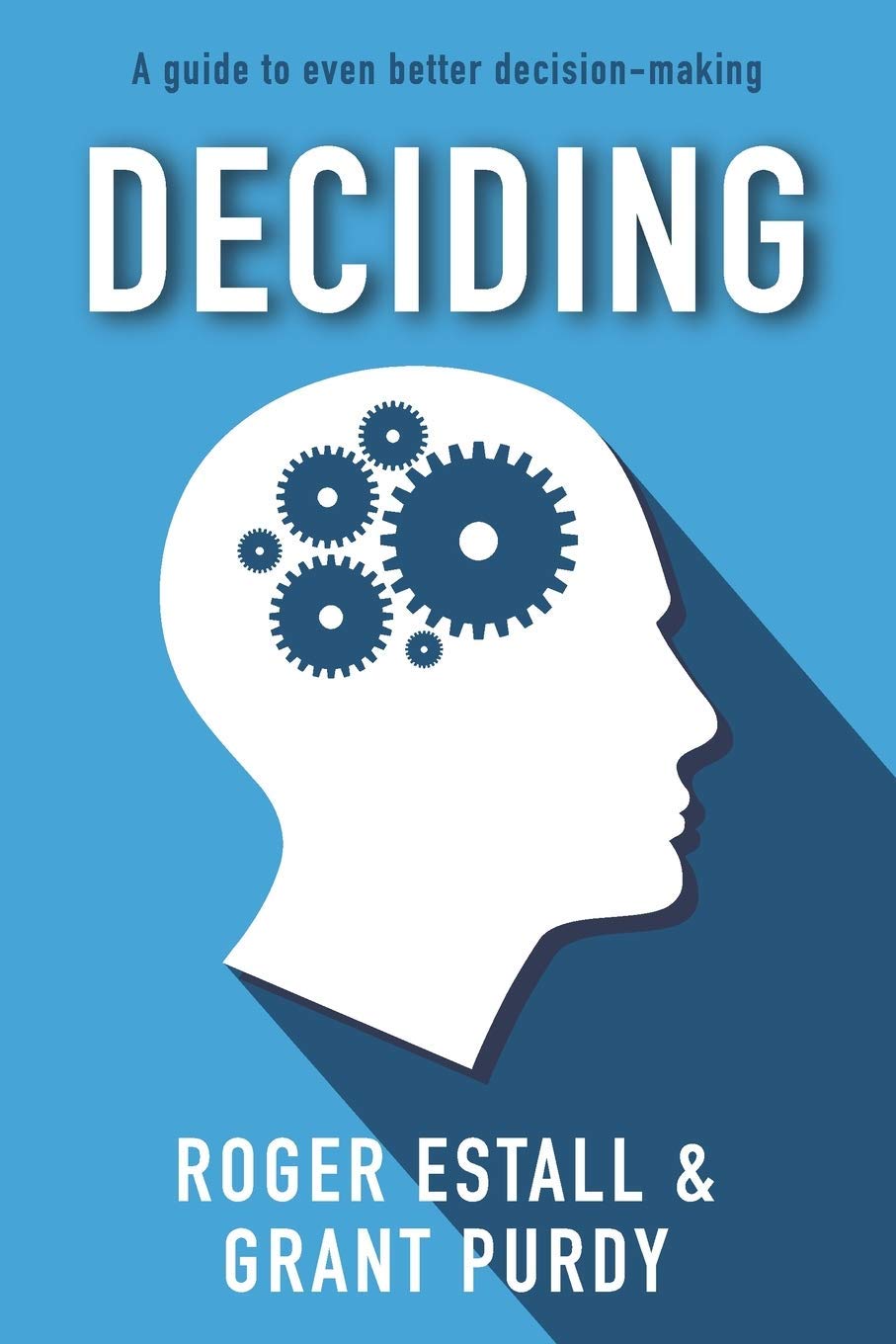
Deciding
Every book on this list diagnoses the problem from a different angle. Systems failures, historical blunders, cognitive traps, structural blindness. They explain brilliantly why decisions go wrong.
None of them tells you what to do next. They are about decisions in general. They do not walk you through a specific decision you are facing now.
That is what Roger and I set out to solve. Deciding takes the patterns these books describe and builds a method around them: five steps that surface the assumptions your decision rests on and help you judge whether you know enough to act. It is not a theory of decisions. It is a procedure for making one.
You could read every book on this list and still leave the assumptions underneath your next decision untested.
Work through your decisionNo sign-up. Just pick your decision and start.
Grant Purdy is the co-author, with Roger Estall, of Deciding (2020), and the architect of the Universal Decision-Making Method.