
After a public consultation, trace one material objection to the requirement it would change before approving the revised proposal. A large response file can leave the central choice unexplained. The next task is to establish what respondents were able to consider and how their evidence should affect the proposal.
Keep the response analysis beside the approval paper. For each important issue, show the relevant requirement, the proposed response and the reason for accepting or rejecting a change. Mark affected groups whose views are missing. Where the proposal includes an equity impact assessment, compare feasible alternatives that could reduce the disadvantage identified for an affected group.
A public consultation invites affected people to comment on a proposal so their information and views can inform the decision.
Responses identify changes the proposal needs
After consultation closes, the project team normally checks submissions, groups the issues and prepares a response report. This work can reveal practical problems that were absent from the original proposal. It can also show disagreement about the intended outcome or who should bear a cost.
Preserve the difference between a response count and the substance of an objection. A frequently repeated preference and a detailed account of an access problem tell the sponsor different things. Both belong in the analysis. Their relevance depends on the decision being made, rather than their place in a ranking.
Keep enough detail for the decision maker to understand the issue. A summary heading such as access may conceal a particular service time, entry route or application requirement. Identify the feature respondents describe and the consequence they say it creates. Distinguish their reported experience from the team's interpretation.
The Cabinet Office consultation principles call for informative consultation and an explanation of how responses inform policy. For a project sponsor, a useful approval paper makes that connection specific: this issue concerns this requirement, and this is the proposed decision about it.
That connection gives the response report practical value. Designers can identify what needs revision. Service owners can examine whether a promised change is feasible. The sponsor can see which disagreements remain and judge whether the proposal still serves its intended purpose.
This task follows stakeholder analysis. Mapping who to engage helps prepare consultation. Once responses exist, the sponsor needs to decide what those responses mean for the proposal itself.
Consider a hypothetical report containing the following two statements. They concern the same proposal but leave its decision boundary unclear.
The problem requires a review of what was genuinely open to change. If a requirement was fixed before consultation, the report should identify that limit and its basis. If it remained open, the approval paper should show how the responses affected it.
Before approving the consulted proposal, identify which objection could change a requirement or reopen an excluded alternative. Start the Walk →
Which alternatives did respondents get to consider?
The response analysis depends on the question people were asked. A consultation can collect careful answers to a narrow question while leaving a wider choice unexplored. Before relying on the results, compare the original consultation material with the decision now proposed for approval.
List the alternatives described to respondents. Identify which parts of the proposal were presented as fixed and which were open. Then ask whether a material objection challenges one of those boundaries. An objection to closing a service may concern the closure itself, even if the questionnaire asked only about its replacement.
Separate an actual constraint from a preference adopted by the project team. Record the source of any claimed limit, such as a funding decision or an existing statutory requirement. Ask who can change it. A choice made elsewhere may be real, but the sponsor still needs to understand its effect on the present decision.
Look for people whose circumstances the response file does not describe. Record which affected groups participated and what is known about those who did not. Silence cannot establish that a requirement works for them. The next step may be targeted evidence gathering rather than another general questionnaire.
The wider stakeholder alignment problem concerns how different interests affect a shared decision. Agreement is useful when it rests on a clear choice. A response report should preserve material disagreement so that the sponsor can address it openly.
A similar distinction matters after an employee satisfaction survey. Gathering views and deciding what those views justify are separate tasks. Here, the sponsor must also check whether the public understood the alternatives relevant to the proposal.
Haringey presented a funding choice as unavoidable
In Moseley v Haringey [2014] UKSC 56, the Supreme Court examined consultation on a council tax reduction scheme. Funding from central government had been reduced. Haringey proposed passing the shortfall to working-age recipients through reduced support.
The judgment addressed the absence of information about realistic alternatives, including meeting the shortfall through other funding or spending choices. Respondents needed that information to give an informed response. The Court allowed the appeal and found the consultation unlawful. It did not order a fresh consultation for the forthcoming year, given the circumstances by then.
The case does not mean that every consultation must list every imaginable alternative. Its significance here is the framing of the choice. The material presented a consequence of Haringey's chosen approach as though the funding change itself made that consequence inevitable.
For a sponsor reviewing completed consultation, the proposed check is to inspect similar boundaries before relying on the findings. Where the response report says people accepted a proposal, ask which alternatives they were shown. Where it reports opposition, ask whether the objection challenges an option the consultation excluded.
This check may change the approval task. Instead of choosing minor amendments within the original proposal, the sponsor may need to reconsider the available options. That possibility should appear in the approval paper before the project commits further money or publishes a final decision.
The government guidance introducing the consultation principles also stresses consultation on genuinely undecided issues. That guidance is directed to government departments. It supports checking whether the question was open, while applicable duties still depend on the particular consultation.
The practical lesson is to make the remaining choice explicit. A clear decision question can reveal whether further engagement would fill an evidence gap or merely repeat a debate whose boundaries remain unclear.
Trace each material objection into the approval paper
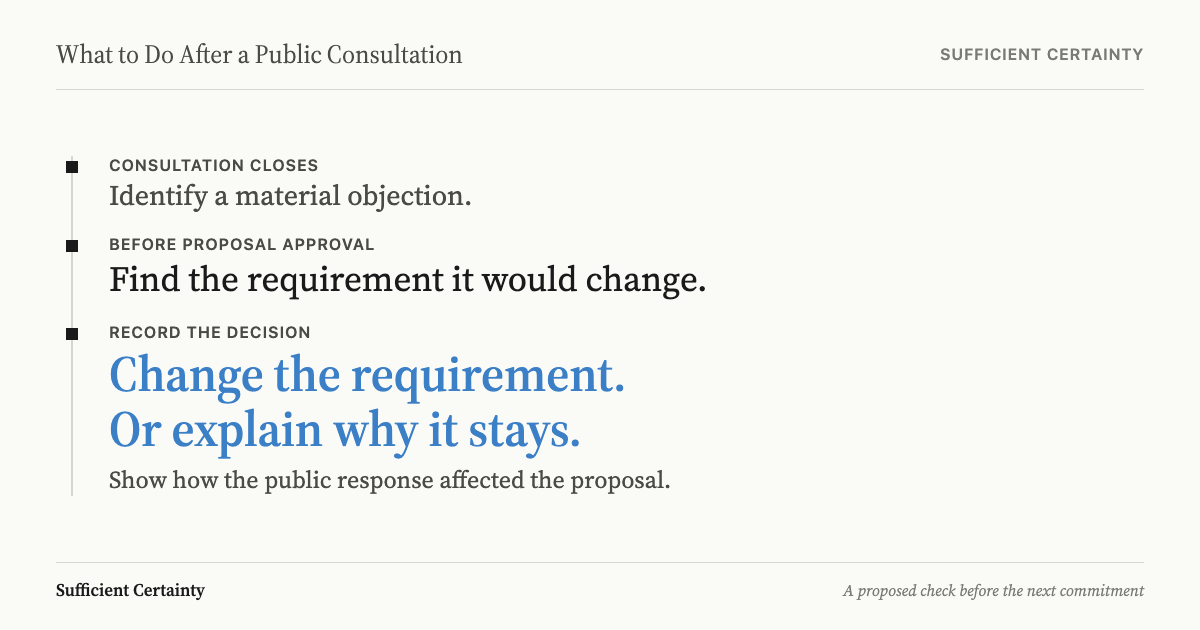
Create a short record for each issue that could change approval. Link the objection to its source, the affected requirement and the proposed response. State whether the team recommends changing the requirement, retaining it or obtaining further evidence. Give a reason that addresses the objection itself.
If a requirement changes, identify the resulting work and who can approve it. Check whether the change affects another group or removes information on which earlier responses depended. Ask the responsible specialists whether further consultation or another procedural step is needed before proceeding.
Which requirement changes because of the material objections?
Apply the Universal Decision-Making Method to the decision that remains after consultation:
- Frame: state the public outcome and the choice still open.
- Tentative Elements: identify feasible proposal changes and who must decide.
- Assumptions: record what the response analysis assumes about alternatives, effects and missing voices.
- Sufficient Certainty: determine which unresolved issue needs more evidence before approval.
- Implement+Monitor: assign the changes and identify what would require reconsideration.
Keep the published response and the implementation instructions consistent. A commitment made to respondents should appear in the requirement or work assigned to the delivery team. If the sponsor rejects a requested change, the response should explain the reason without implying that the objection was absent.
Use a specific account of the remaining gap where evidence is incomplete. Name the missing information, the person responsible and the decision it could affect. Do not turn a missing view into an assumed endorsement.
Before approval, check the revised proposal against the material issues one final time. The sponsor should be able to explain what changed, what remained and why. That record connects public participation to the decision and gives the delivery team clear commitments to implement.
Assign someone to check the transfer from the approval paper into the revised specification. Compare the actual wording, including any exception or condition attached to the commitment. A response promising improved access needs an identifiable service or design requirement. Keep the source issue reference so later reviewers can follow why that requirement changed.
How confident are you that the consultation responses address the alternatives behind the proposal you are approving?
Work through your decisionNo sign-up. Just pick your decision and start.
Grant Purdy is the co-author, with Roger Estall, of Deciding (2020), and the architect of the Universal Decision-Making Method.