
After an allergen risk assessment, compare the current batch formulation with its label and the cross-contact evidence before product release. In June 2024, FDA warned Bimbo Bakeries about allergen declarations that did not match specified bread formulations. A completed assessment still needs an authorized decision about the product actually being released.
An allergen risk assessment examines how allergens could enter a food and whether controls adequately address the identified exposure routes.
Match each allergen finding to a production control
Take the completed assessment to the records for the next product release. Identify the recipe version and the ingredients actually issued to the batch. Compare them with the label version selected for packaging. Ask the responsible food safety specialist to review any mismatch before the product is released.
The next task is to put the findings into the production and labeling controls that apply to that product. The FDA's allergen guidance distinguishes controls against unintended allergen introduction from controls that prevent undeclared allergens on labels. Both matter. Checking the ingredient declaration does not establish that a cross-contact control covers the current run.
The release decision needs evidence for the current formulation and the conditions under which it was made. Keep that evidence attached to the relevant batch or product record. An assessment of an earlier recipe cannot silently become approval for an ingredient substitution.
The checklist illustrates questions to resolve; its status markers do not certify a real batch. Use the business's existing release system to record the actual result. Identify the person with authority to hold the product while a discrepancy is investigated. Keep the required approval separate from the production schedule.
This gives the risk assessment an immediate use. Its findings must reach the people who select ingredients and packaging. A manager who only receives the final risk rating cannot determine whether a particular label belongs on the product awaiting release.
The assessment makes exposure routes visible
The assessment helps the business identify where intentional ingredients and unintended contact need different treatment. It can connect an incoming ingredient specification to the production route. It also helps identify which proposed changes require review. Keep those connections when the assessment becomes an action list.
The UK Food Standards Agency guidance on precautionary labeling places the labeling decision after analysis of allergen cross-contact. It says precautionary information should address an identified risk that cannot be removed through controls. These are UK guidelines, not a universal labeling rule. The responsible specialist must apply the current requirements for the product and its market.
The assessment is useful when its findings remain connected to the product specification used in production. That connection allows the reviewer to ask whether the proposed label describes the food and whether the control evidence covers its actual manufacture.
This differs from simply assigning a control owner. An owner can be named while the ingredient specification has changed. It also differs from a general demonstration that equipment can be cleaned. Work after a food-safety risk assessment can examine that control. The allergen release checkpoint reconciles the evidence with the recipe and label for this product.
Use current supplier information. If the material delivered differs from the approved specification, the reviewer needs that fact before relying on the assessment. Keep the discrepancy visible until the qualified person has determined its effect. Do not convert an uncertain ingredient status into an unreviewed packaging change.
Connect the allergen findings to the recipe and label used for this batch. Start the Walk →
What evidence permits this label and production run?
Set the evidence needed for release before the product reaches dispatch. The food safety specialist should define which formulation and label records must agree, and which cross-contact conditions need confirmation. The manager authorizing release should be able to find that evidence without reconstructing the assessment from meeting notes.
Sufficient certainty does not permit a manager to waive an applicable allergen control or labeling requirement. It concerns whether the available evidence supports the particular release decision within those requirements. A production deadline cannot supply missing technical evidence.
Suppose an ingredient is substituted after the assessment. In this proposed example, the replacement's specification has not yet been checked against the label. The reviewer should treat that relationship as unresolved and use the established hold and escalation process. The example does not establish whether the replacement is acceptable; it identifies the evidence gap requiring qualified review.
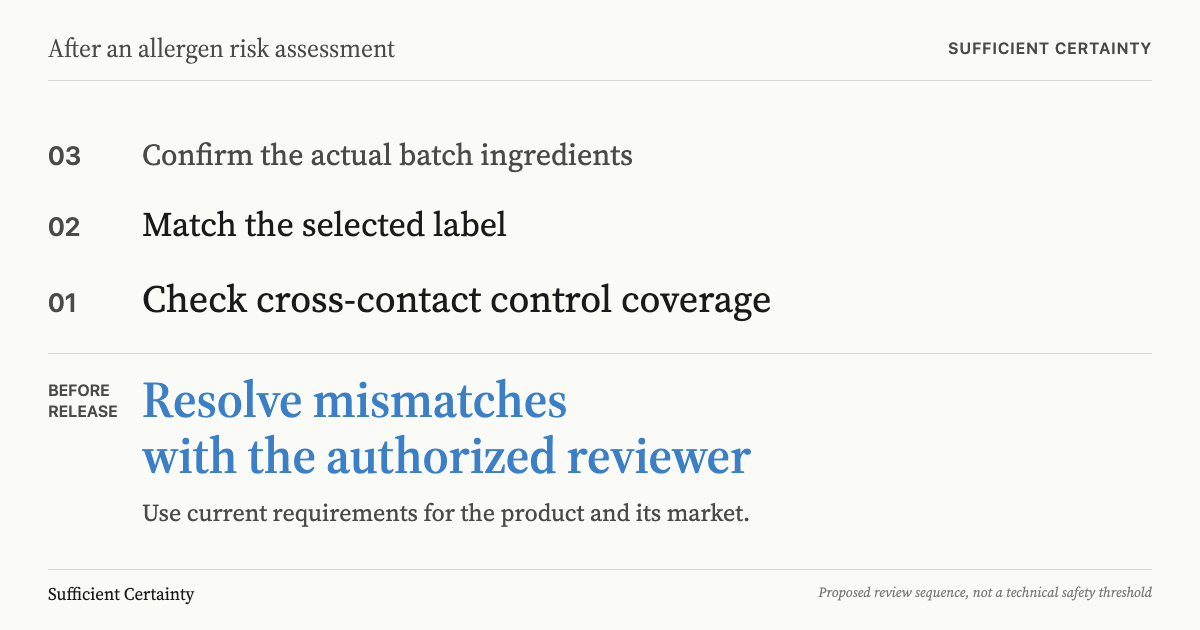
Record the finding that would stop the release decision. It might be a different ingredient specification or packaging carrying an earlier recipe's declaration. The specialist should define the required response for the actual process. The manager needs an explicit handoff when that condition appears, rather than an assumption that someone else will review it.
The chain is a proposed failure route, not an account of an observed incident. Break it by returning the changed specification to the responsible reviewer before release. The checks built after a HACCP plan can carry that handoff without creating a separate approval system.
Bimbo’s declarations and its manufacturing controls
FDA's June 17, 2024 warning letter to Bimbo Bakeries followed inspections and a review of product labels. The agency said specified Sara Lee breads declared sesame in ingredient and Contains statements although sesame was not an ingredient in their formulations. FDA identified those labels as false or misleading.
The letter said labeling could not replace good manufacturing practices or preventive controls against allergen cross-contact. It separately discussed voluntary advisory statements about possible unintended presence. Those statements had to be truthful and not misleading. The distinction concerns what the label says and the controls required in manufacturing.
The warning letter notified the company of FDA's concerns and provided an opportunity to respond. It is not a final adjudication. It does not establish injuries or disclose a completed named allergen risk assessment. The case supports a limited point about formulation, declarations and manufacturing duties.
An ingredient declaration and an advisory statement require different supporting reasons. For the proposed release, ask which type of statement is being considered and what evidence supports it. The qualified specialist should resolve its suitability under the applicable rules. Adding words to packaging does not resolve an unanswered production-control question.
Keep this checkpoint before release. The separate work after a food recall concerns affected product already distributed. The immediate question here is whether the current release record demonstrates that formulation, packaging and required controls have been reconciled.
Set release conditions before changing the recipe
Use the Universal Decision-Making Method to connect the assessment with the authorized commitment. The five steps described in Deciding, by Roger Estall and Grant Purdy, can organize the decision without replacing specialist review or the existing food safety system.
- Frame: identify the product and release decision, including the market's applicable requirements.
- Tentative Elements: identify the formulation, selected label and relevant manufacturing conditions.
- Assumptions: identify where a record is being treated as current without confirmation.
- Sufficient Certainty: have the responsible specialist judge whether evidence meets the required release conditions.
- Implement+Monitor: record the authorization and the change that requires another review.
Release authority should follow the evidence for the actual product, with unresolved mismatches held for review. Preserve the reason for the decision in the existing batch record. The next shift must know which recipe and packaging versions the approval covers.
Where the available records disagree, preserve the conflicting versions for the reviewer. Identify which batch and label stock could be affected. A corrected document should not erase the reason the hold was raised. Keep the final resolution with the release decision so a later reviewer can understand why the product was accepted or remained on hold.
Give supplier substitutions and recipe changes a clear route back to that reviewer. Follow decision monitoring by naming the change that invalidates the earlier basis for release. When that change occurs, obtain the required review before relying on the earlier authorization.
The next production run needs a matched formulation, label and control record, reviewed by the person authorized to decide. The completed assessment supplies findings; the release record shows how those findings were resolved for the food being supplied.
Does the release evidence cover the formulation and label actually in use?
Work through your decisionNo sign-up. Just pick your decision and start.
Grant Purdy is the co-author, with Roger Estall, of Deciding (2020), and the architect of the Universal Decision-Making Method.