
After a board evaluation, put one recommendation beside the relevant meeting minutes before approving the response. RS Group discussed its internal evaluation in March 2025 and agreed changes to future board work. For a chair with a completed report, the next decision is which proposed change has enough support to adopt.
A board evaluation reviews how the board, its committees and individual directors perform their roles and work together.
RS Group connected its evaluation to board actions
RS Group's 2025 governance report describes an internal evaluation using questionnaires and interviews. Its recommendation and action table includes more time for strategic discussion, market visits, training and executive succession planning. It links those findings to specific changes in the board's future work.
Agreed responses included allocating sufficient discussion time to strategic papers and further discussion of technology. The report also described future site visits and investigation of further training. Regular succession updates had been placed on the Nomination Committee's forward agenda for 2025/26.
The distinction between recommendations and agreed actions matters when reading this account. The report separately presents progress against the previous year's evaluation. Its future visits and training proposals should not be read as completed activities. Nor does this table establish that the new actions improved business performance.
An agreed action needs its own evidence before the chair can treat the finding as resolved. A calendar entry establishes that time has been reserved. The chair still needs to judge whether that change will address the difficulty identified in the evaluation. That judgment requires a closer look at the affected board work.
Consider a proposed response to a finding that directors have too little time to discuss strategy. The following is an application for the reader, not a further account of RS Group. The obvious remedy is a longer strategy session. Before approving it, ask the company secretary for the relevant agenda, papers and minutes from a recent strategic decision.
Read them against the evaluation finding. Was discussion cut short because the next item had to start? Did directors receive the paper too late to prepare? Did the presentation repeat the written report? Did an unanswered question return at the next meeting? These observations support different responses. Additional time may be useful, but it cannot be assumed to solve each problem.
The evidence needed to approve a remedy depends on what adopting the remedy will commit the board to do. Moving a routine update may be easy to reverse. Changing a committee's responsibilities affects who examines proposals and where they go next. The chair should require clearer evidence before accepting the more consequential change.
Minutes can show what was decided and which concerns were recorded. They may say little about who spoke or why discussion ended. If they leave the finding unclear, compare the account with direct observation or ask participants about the specific meeting. Preserve confidential feedback. The purpose is to understand the practice well enough to choose a response, rather than identify a respondent.
For the proposed longer strategy session, agree beforehand what would justify keeping the change. The chair might look for directors examining alternative courses before a commitment, with unanswered questions assigned for follow-up. These are proposed observations, not verified results from the company case. A more complete record of a board decision can help show what the discussion actually established.
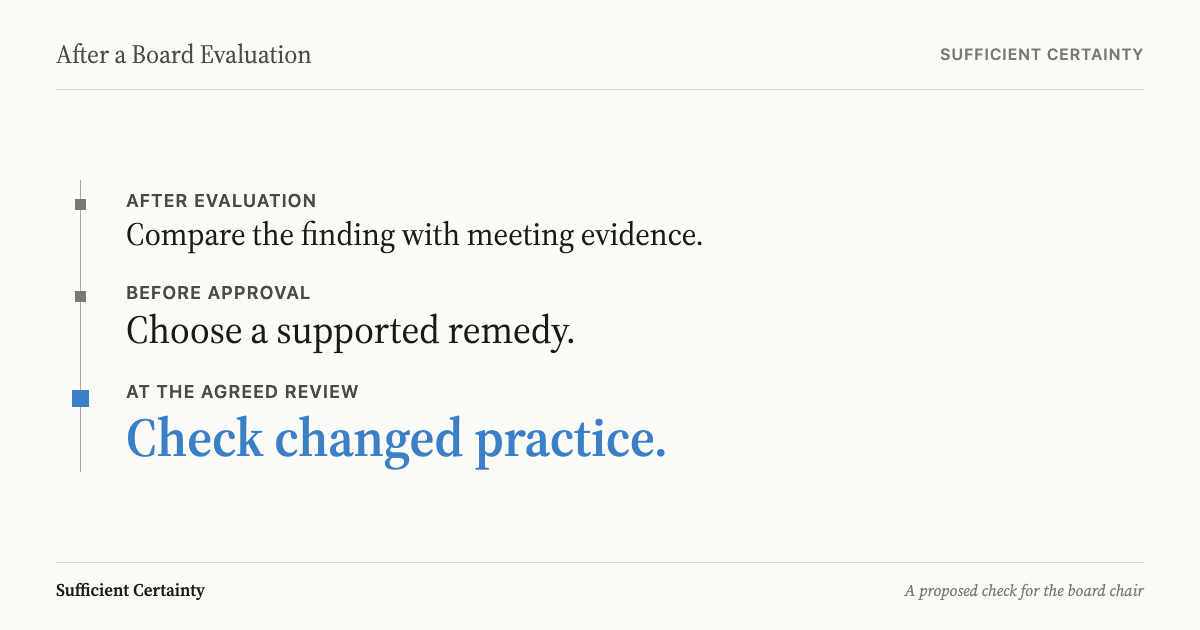
The useful lesson from the published table is that an evaluation can lead to named work on an agenda. The reader's additional check concerns whether the selected work is warranted. Keep the original finding available at the review meeting so directors can compare the response with the problem they agreed to address.
Does the meeting evidence support the change your board evaluation recommends? Start the Walk →
What does the board evaluation actually establish?
A completed evaluation gives the chair a structured account of how participants see board performance. It can reveal concerns that a normal agenda leaves little time to discuss. It can also identify practices worth keeping. A response plan should preserve those strengths while addressing the findings that warrant change.
The UK Corporate Governance Code asks chairs to act on review results by recognising strengths and addressing weaknesses. That supports a considered response. It does not make each recommendation an automatic instruction to adopt a particular remedy.
A finding can justify attention before it justifies the proposed solution. A complaint about weak challenge could concern preparation, conduct during meetings or how the chair handles disagreement. Ask what the evaluation observed and how the reviewer reached the recommendation. Keep the finding distinct from the explanation offered for it.
The FRC guidance on board performance reviews encourages rigorous review of the board as a unit. It also notes the limits of questionnaire-based external reviews for understanding boardroom dynamics. This makes the source of a finding relevant to the confidence placed in it.
Shared agreement about a difficulty does not establish why it occurs. Directors may agree that papers are poor while disagreeing about what is missing. Ask which information was unavailable for the decision in question. This brings the response back to board work, rather than commissioning a general redesign with no agreed purpose.
Before accepting a recommendation, also check the scope of the review. A finding about the whole board may rest on evidence from a particular committee. Ask whether the proposed response should apply there first. Extending a change across every meeting needs a reason, especially when other committees already handle the same issue effectively.
The scope here is the board's working practice. A decision about nominating a director requires different evidence about the appointment. Keep responsibility for the practice change clear, including where governance and management responsibilities meet. The wider organisational governance question is whether the arrangement helps the board fulfil its role.
Check one proposed remedy against meeting practice
Choose a recommendation that affects an upcoming meeting. Write the finding in the evaluator's terms, then state the proposed response separately. Identify the meeting evidence that supports the connection between them. If that connection remains uncertain, ask a focused question before making a lasting change.
Approve a limited trial when the evidence supports trying the change but cannot yet support keeping it. For the proposed strategy-session remedy, the chair could protect discussion time and ask presenters to shorten repeated material. Name the person responsible for arranging the trial and the meeting where directors will review it.
Do not ask the company secretary to rewrite earlier minutes to strengthen the case for a remedy. Record any later clarification separately.
Make the follow-up practical for those who must supply the evidence. Ask the company secretary to retain the relevant paper and note the questions carried forward. The chair can add an observation about how the discussion was handled. Ask directors whether the specific difficulty remained, without replacing the original finding with a broad satisfaction question.
At the agreed review, compare the practice with the original finding. Did directors have time to examine the proposal? Were important questions answered before approval? If the change did not address the difficulty, decide whether the remedy needs adjustment or the explanation was wrong. Attendance at the session alone cannot answer those questions.
Set the standard for keeping the remedy before reviewing whether it worked. That reduces the chance of calling any completed activity a success. Record the intended change and remaining uncertainty in the decision record. Use the Universal Decision-Making Method to judge whether the available evidence is sufficient for this commitment.
A decision to defer a remedy also needs a reason. If the evidence does not support a permanent change, state what is missing and when it can be checked. Do not leave the recommendation on an open action list with no route to a decision. The next relevant meeting may supply enough evidence without repeating the whole evaluation.
Close the finding only when the agreed follow-up supports that conclusion. If the evidence remains incomplete, keep the issue open with a specific next check. The monitoring approach should let directors see whether the intended practice continues after the trial, and when they need to reconsider it.
How much evidence does the board need before adopting the proposed remedy?
Work through your decisionNo sign-up. Just pick your decision and start.
Grant Purdy is the co-author, with Roger Estall, of Deciding (2020), and the architect of the Universal Decision-Making Method.