
After a DCF analysis, write the proposed transaction at the top of the valuation summary. A valuation can be internally consistent and still answer the wrong question for the buyer. Before using its value to approve a deal, state what would change hands, on what terms, and for what purpose.
The next step concerns the choice the calculation serves. The data-driven decision-making hub examines this relationship between an analytical result and the action someone must approve.
Discounted cash flow analysis estimates present value by discounting expected future cash flows at a rate suited to those cash flows.
A DCF calculation values the cash flow entered
A completed DCF makes a forecast inspectable. It puts expected receipts, costs, investment needs, timing, and a discount rate into one calculation. The reader can trace the result to its inputs. That is useful work when the alternative is a price justified by enthusiasm or a recent market comparison.
Start by reading the model's description of the asset. Does it value the operating business, an equity stake, a project, or a contractual payment? Name the claim being valued. Those objects have different cash flows. A result labelled “company value” can leave the reader unsure what the quoted figure includes.
Aswath Damodaran's introduction to valuation distinguishes firm value from equity value. Cash flows to the firm precede debt payments. Cash flows to equity follow them. The discount rate must correspond to the cash flows selected. These distinctions matter before comparing the model's output with an asking price.
Check the calculation's date and currency. Then mark whether the value assumes continued operation under the current owner or changes under a buyer. If planned changes generate the forecast cash, identify who must deliver them. The buyer may need people, permissions, equipment, or contracts that the seller does not currently have.
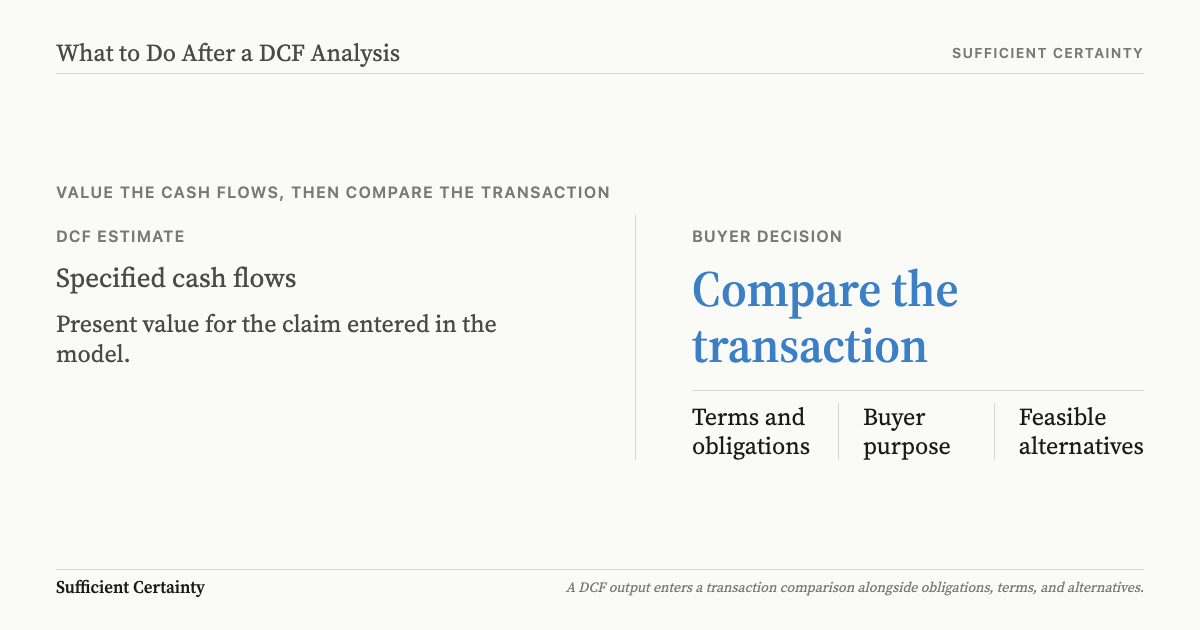
Keep the operating forecast and the proposed transaction separate on the summary. A forecast is one input to the choice. A buyer still needs the offered price, payment terms, obligations assumed, and feasible alternatives. A technically sound valuation cannot supply terms that were never entered into it.
Use the valuation result
- Compare the model value with the asking price.
- Accept the model's stated interest and cash flows.
- Leave other transaction terms outside the comparison.
Review the proposed transaction
- State the interest and obligations the buyer acquires.
- Check the model against the offered agreement.
- Compare feasible options for the same purpose.
The comparison above is a suggested review of the decision, not an extra valuation method. It asks whether the model and the approval paper describe the same purchase. A problem framing canvas can help state that purchase clearly before anyone debates small changes to the discount rate.
Does the DCF value the same cash flows and obligations that the proposed transaction would give the buyer? Start the Walk →
Whose obligations sit outside the valuation?
Read the proposed agreement beside the model. Identify the cash receipts the buyer obtains and the commitments the buyer takes on. Then find where each material commitment appears in the forecast or in the adjustment from firm value to equity value. Check each obligation once. Leaving it out overstates the relevant value. Counting it twice understates it. Where the commitment includes pension contributions, the follow-up to an actuarial valuation compares the promised payment dates with the employer's cash forecast.
Damodaran's DCF lecture notes explain why cash flows and discount rates must match. That calculation check should accompany a transaction check. A correctly discounted operating forecast still needs an explicit account of which claims the buyer receives and which liabilities remain elsewhere.
Ask the transaction team about commitments absent from the summary. These might include agreed investment after closing, integration work, employee arrangements, or restrictions on selling assets. These are items to investigate, not assertions about every acquisition. Record whether each item changes forecast cash, the purchase terms, or the ability to proceed.
Some conditions cannot be resolved by subtracting a figure. A missing operating permission could prevent the planned activity. An unavailable manager could delay integration. The question is whether the proposed purchase can achieve its stated purpose under the actual terms. Do not price an option that cannot be delivered. Establish its feasibility before refining its apparent value.
Next, name an alternative that the buyer could actually choose. Buying a smaller stake, negotiating different terms, developing the capability internally, waiting, or declining may merit consideration. Include only options relevant to this decision. This is the same distinction made when challenging a business case before approval: assessing one proposal does not establish that it beats the alternatives.
For a proposed acquisition, add a short transaction description to the approval paper. State the buyer's purpose, the interest acquired, the obligations assumed, and the alternative being compared. Then ask the analyst which parts the existing valuation covers. Missing terms require investigation before they become reasons to approve the price.
PCC: acquisition expectations and later cash-flow forecasts
Berkshire Hathaway bought Precision Castparts in 2016. In its 2020 annual report, Warren Buffett acknowledged paying too much. He attributed his error to excessive optimism about PCC's normal profit potential. This was a judgment about future earnings and the price paid for the business.
The pandemic later disrupted the aerospace industry. Berkshire reassessed goodwill and indefinite-lived intangible assets during the second quarter of 2020. Its financial statement note 13 reports approximately $10 billion of impairment charges relating to PCC. The calculations used discounted cash flow methods.
These are separate events. The report documents DCF use in the 2020 impairment review. It does not establish which valuation model Buffett used for the 2016 acquisition. Keep the accounting review separate from the purchase decision. An impairment charge does not itself identify the best action for the owner.
The flow above describes the documented reassessment and the separate decision it cannot settle. It does not imply that Berkshire followed this article's proposed review process. A buyer considering a new purchase could use the distinction to ask what the forecast values and what approving the transaction commits the buyer to do.
For example, in a proposed acquisition, record whether the purpose is access to production capacity or ownership of expected cash earnings. Those purposes could make different options relevant. A supply agreement might address the first purpose without acquiring the company. That is a hypothetical application, not an account of Berkshire's choices.
Compare options against the buyer's purpose. The PCC disclosure supports caution about forecasts and price. It does not show that another transaction would have been better. Use due diligence proportionate to the decision to resolve material questions about the actual proposal, rather than treating a later write-down as a complete explanation.
Check the transaction before accepting its value
Before the approval meeting, attach the transaction description to the valuation summary. Ask the responsible analyst and transaction owner to confirm that both documents describe the same interest, date, cash flows, and obligations. Resolve disagreement explicitly. If the deal has changed, determine whether the completed valuation still addresses the proposal on the table.
Berkshire's management discussion of the reassessment says discount rates increased and earlier long-term cash-flow forecasts fell. The reported changes show that a value can move when expected conditions change. They do not establish a mechanical rule for approving a purchase.
Once the transaction is clear, use sensitivity analysis where it could change the choice. Test a forecast input against the offered terms and the real alternative. A different model value matters when it would change the decision to buy, renegotiate, wait, or decline. Otherwise, further decimal precision may add little.
Set a limit tied to the actual terms. Record which conditions justify proceeding and which would require another review. These could concern price, an obligation, or evidence that the buyer can deliver the forecast changes. State who must verify each material condition before the commitment becomes binding.
The Universal Decision-Making Method starts with the purpose and the decision being made. Here, its application is concrete: value the relevant cash flows, compare feasible transactions, and record why the chosen terms serve the buyer's purpose. The model supplies evidence within that account.
Retain the key conditions with the decision, including when to check them again. Monitoring the conditions behind a decision makes later review possible without pretending the original forecast was certain. The approval should identify what has been chosen and why, rather than presenting the DCF figure as the decision itself.
Which feasible alternative serves the buyer's purpose better than the transaction priced by this DCF?
Work through your decisionNo sign-up. Just pick your decision and start.
Grant Purdy is the co-author, with Roger Estall, of Deciding (2020), and the architect of the Universal Decision-Making Method.