
After an environmental impact assessment, write the chosen alternative beside the work proposed for the next stage. A complete assessment can still support the wrong next decision if that stage was never clearly named. Before moving to design, funding or construction, make the connection explicit.
An environmental impact assessment examines the likely environmental effects of a proposed project and measures to prevent or reduce harm.
An assessment makes the effects of alternatives visible
A completed assessment gives a decision-maker evidence about the proposal's effects. It can describe the existing environment, compare alternatives and identify measures needed to reduce harm. It also makes the reasoning available for scrutiny. That work deserves to remain part of the decision, rather than disappear into a project archive.
The English planning guidance on environmental impact assessment describes environmental information and consultation responses informing the decision on development consent. That is one particular planning regime. It illustrates the distinction between preparing environmental evidence and deciding whether to permit a proposal. Requirements differ between jurisdictions and types of development.
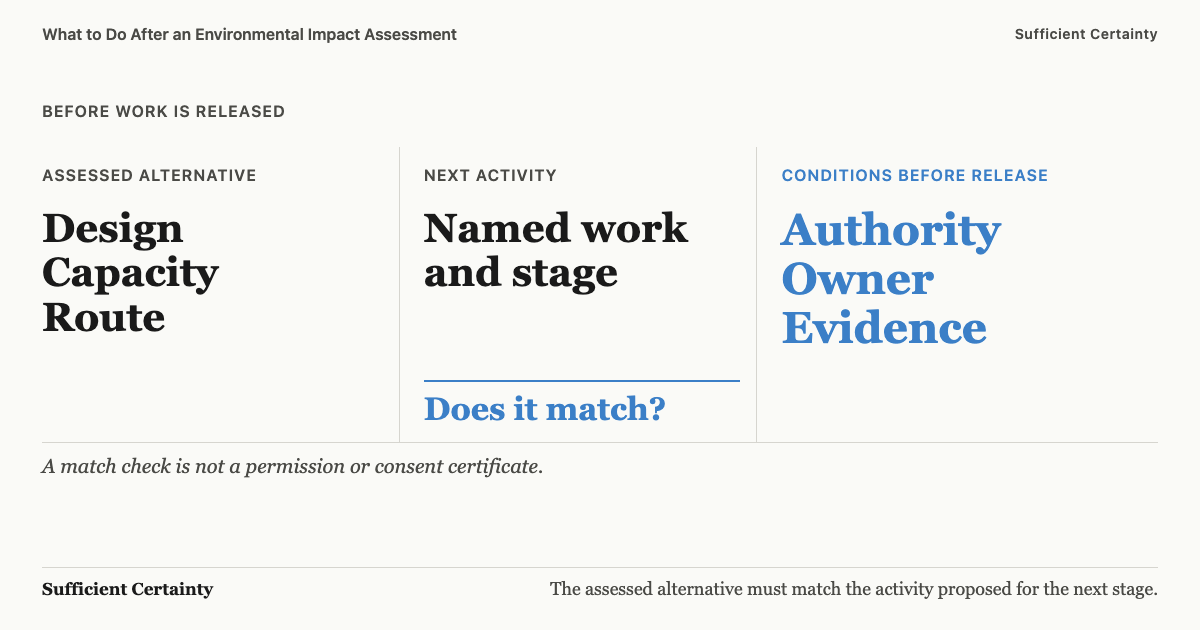
Keep the assessed proposal identifiable. A project name alone is too broad. The relevant proposal may be one route, one capacity or one construction sequence. If the report compares several alternatives, the decision record should identify which alternative supports the proposed next action. Include the drawing or document version that defines it.
This makes later discussion more useful. The team can ask whether a revised design remains within the description assessed. It can also see which effects relate to construction and which relate to operations. A benefit expected during operation cannot answer every question about disruption during construction.
Report handed to delivery
- Carry the preferred alternative into the project plan.
- Treat the report title as the description of the work.
- Leave changes in design or stage for later discussion.
Decision matched to assessment
- Name the alternative and the exact stage being released.
- Check that the assessed design matches the proposed work.
- Record outstanding conditions before anyone commits resources.
The comparison above describes two possible ways to use the report. It does not claim that every project follows the first. The practical difference is whether someone can trace proposed work back to the evidence used to justify it. Preserve that connection before assigning delivery dates.
This belongs within organisational governance: deciding who can authorise which activity, with what evidence. The distinction between governance and compliance matters here. Meeting an assessment requirement does not explain every judgment about resources, timing or the next commitment.
Which assessed alternative supports the project stage being released next? Start the Walk →
Which activity does the assessment support?
The phrase “the project has been assessed” can hide several different decisions. Selecting a preferred alternative, releasing design funds and starting a particular package of work are separate commitments. One assessment may inform all three. That does not mean it resolves them at the same level of detail.
Name the decision at the right scale. Start with the action that someone is asking to take now. If it concerns a specific construction package, identify that package. If it concerns a program of possible projects, record what the program decision leaves for later. Do not silently replace one with the other.
Check the report against that action. Does it describe the location, capacity, route and sequence proposed? Does its prediction assume protective measures that the current plan includes? Which parts of the design remain undecided? These questions establish what the existing evidence covers before asking for more analysis.
A clear problem frame also exposes alternatives obscured by the phrase “proceed with the project”. The next choice might be a smaller stage, a different sequence or a pause while a specific condition is resolved. Retain the assessment's comparison rather than reduce it to a general endorsement.
Separate predicted effects from permission to act. A prediction describes what is expected under stated conditions. Permission depends on the applicable authority and requirements. A budget release depends on the organisation's own decision. Record these separately so that one document does not appear to settle all three.
Use the decision rights already assigned to the project. Ask the responsible person to confirm the authority for the proposed action. Where consent conditions apply, record the exact condition relevant to that stage. A general note saying “environmental matters complete” gives the delivery team too little to check.
This is also the point to state what remains unknown. An incomplete detail does not automatically justify delay or approval. Identify whether that detail could change the next decision. Keep unresolved matters visible, with an owner and a date for providing the necessary evidence.
USMCA: from a broad assessment to phased work
The USMCA contaminated transboundary flows project provides a documented example of this distinction. EPA and the U.S. Section of the International Boundary and Water Commission prepared a programmatic environmental impact statement. The work concerned water infrastructure intended to reduce contaminated flows from Tijuana into the United States.
The November 2022 final assessment compared a limited approach, a more comprehensive approach and no action. It set a framework for later funding decisions. Its comparison made the choice visible without treating every component as a fully specified construction project.
In June 2023, the agencies issued their joint record of decision. They selected a minor variation of Alternative 2. The treatment plant expansion would first reach up to 50 million gallons per day. A second phase intended to reach up to 60 depended on available funds.
The record also specified supplemental analysis if phasing introduced substantial unassessed impacts or significant new information or circumstances. Its mitigation attachment identified responsible agencies and implementation stages. Supplemental projects required later analysis to refine impacts and mitigation. These are commitments recorded in 2023, rather than a statement of current rules for every project.
A selected alternative can contain further decisions. That is the useful lesson here. The assessment supported a defined program choice. The decision then preserved distinctions between phases and between projects requiring different levels of further work. Completion of the assessment did not erase those distinctions.
This example is a proper handoff, not a failure story. Nor does the 2023 record prove that construction finished or predicted benefits occurred. Those claims would need later delivery and performance evidence. The same separation matters when judging decisions and their outcomes.
A project team can use this example without copying its legal process. Record the limits of the decision being made. Show which work it covers now, which depends on later resources and which requires further evidence. The governing rules must still be checked for the actual project.
Record the next decision before releasing the work
Put the next decision in the existing project record. Use one sentence describing the proposed activity, its location and its stage. Beside it, name the assessed alternative and relevant document version. This creates something that a project leader, environmental specialist and approving authority can review together.
Give each remaining condition a responsible person. For each measure relevant to the proposed work, record who must provide it and when. State what evidence will show that it is in place. A measure mentioned in a report is insufficient if the delivery plan never assigns it.
For example, if the assessed proposal depends on a specified construction sequence, compare that sequence with the contractor's proposed plan. This is a suggested check, not a report of practice in the USMCA project. If the plans differ, ask the responsible specialist what the change means before releasing the affected work.
Use an existing decision record rather than create another reporting system. Keep the assessment reference, remaining conditions and next review point beside the commitment. The Universal Decision-Making Method helps make the decision clear before testing whether its supporting evidence is sufficient.
Review changes before they become commitments. Identify who must be told when the design, sequence or observed effects depart from the assessed proposal. State which change requires a decision on further environmental review. Use applicable requirements and project-specific advice to set that trigger. The historical USMCA provisions are an illustration, not a universal legal test.
Before the next stage is signed off, the approving person should be able to identify what is being released and why. Unresolved conditions should remain visible. That gives the assessment a practical role in delivery while preserving the decisions that still belong to the responsible people.
An environmental assessment predicts effects; the next commitment still needs a named activity and clear limits.
Work through your decisionNo sign-up. Just pick your decision and start.
Grant Purdy is the co-author, with Roger Estall, of Deciding (2020), and the architect of the Universal Decision-Making Method.