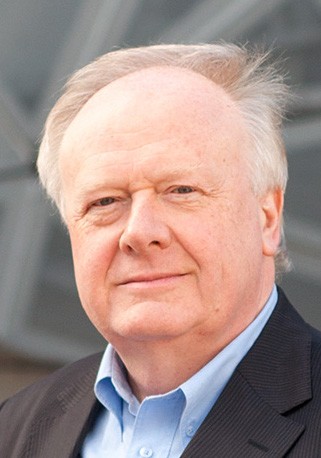
Analysis paralysis is not a character flaw and it is not overthinking. It is the predictable output of any decision process that has no stopping condition. When nothing defines what would count as sufficient evidence to act, review expands indefinitely and the decision ages in place.
Analysis paralysis is not a character flaw and it is not overthinking. It is the predictable output of any decision process that has no stopping condition. When nothing defines what would count as sufficient evidence to act, review expands indefinitely and the decision ages in place. The fix is structural: insert a sufficiency test, and the paralysis resolves itself.
Analysis paralysis is the predictable result of decision processes designed to pursue maximum certainty. It is not a personality flaw. It is not a cognitive bias. It is what happens when the systems an organisation builds to "manage risk" demand certainty that no decision can provide.
I have spent fifty years advising organisations, and the pattern is drearily consistent. A consequential decision appears. Papers are commissioned. Reviews are requested. The reviews recommend further reviews. The calendar fills; the decision gets older. Nobody has refused to decide. They have simply built a process with no way to finish.
The cure is not less analysis. That is the slogan people reach for when they have mistaken delay for laziness. The cure is a stopping condition. The Universal Decision-Making Method replaces the pursuit of maximum certainty with sufficient certainty: the point where the Decider knows enough to act and knows what to monitor after acting.
Analysis paralysis is the state of delaying a choice because you keep gathering and reviewing information without a clear point for acting.
What analysis paralysis actually is
Most definitions frame analysis paralysis as a cognitive trap: think too much, act too little. This is tidy and wrong, at least in organisations. The volume of thought is not the issue. The missing piece is a rule that says when the analysis has done its job. Without that rule, more analysis becomes the safest available substitute for a decision.
The popular account points to fear of making decisions, too many choices, and choice overload. These are real conditions, but they are not the centre of this page. I have written separately about what analysis paralysis really means; the important point here is that organisational paralysis is not caused by a nervous person staring at a menu. It is caused by a process that can always ask for more.
You see it when a committee receives a report, finds one uncertainty, and treats that uncertainty as permission to defer the decision rather than as an assumption to examine. The decision has not become wiser. It has become socially safer to avoid.
The apparatus that creates it
Risk management, as most organisations practise it, often begins with the answer already chosen: build a framework, fill a register, assign owners, report upward. The question that should come first is much simpler: what decision are we trying to make? When that question is skipped, the apparatus starts serving itself.
The practical work of maintaining a risk register can distract Deciders from the task of deciding. I have watched intelligent people spend the best part of an afternoon debating whether a box should be amber or red while nobody asks which assumption is stopping the decision. The register becomes the artefact. The decision becomes a rumour.
That is why I call this a belief system, not merely a set of tools. The apparatus rewards visible caution: workshops, matrices, assurance papers, governance gates. It is rarely malicious. It is simply built to demonstrate that thinking occurred, not to determine whether enough is known to act.
Why more analysis makes decisions worse
More analysis improves a decision only when it tests the assumptions on which the decision depends. If the assumptions are unnamed, more analysis merely gives the room more material to argue about. It can make people feel safer while moving them further from the decision, which is an impressive way to spend money badly.
A product team can spend six extra months auditing architecture, security, and dependencies before a release. Each review may be technically defensible. If nobody asks whether the remaining uncertainties are significant enough to justify missing the market window, the analysis is not improving the decision; it is consuming it.
This is the common thread in serious analysis paralysis examples: respectable process without a sufficiency gate. The same mistake shows up as data paralysis, where dashboards multiply because nobody has tied the metrics to the assumptions that matter. The effects of analysis paralysis are not limited to delay. Delay changes the decision itself.
Pick the decision that has been circling your desk and put a stopping condition on the analysis. Start the Walk →
Maximum certainty vs sufficient certainty
Maximum certainty is an attractive phrase because it sounds responsible. It is also impossible. No Decider can know the immediate and ultimate consequences of an important decision before making it. If your process requires that level of certainty, it has quietly made inaction the default while preserving the appearance of prudence.
The "70% rule" is an improvement only because it admits that completeness is unavailable. It remains arbitrary. The old problem in rational decision making was never simply the quantity of information. It was knowing which uncertainties mattered to the outcome and which merely made the file thicker.
Sufficient certainty asks a different question: have the significant assumptions been recognised, tested to the extent justified by their consequences, and either accepted or reduced? A board that asks for "just one more report" before approving a time-sensitive investment may believe it is buying safety. It may actually be selling the opportunity. The analysis paralysis solution is not bravery. It is a stopping rule that can be defended.
What analysis paralysis looks like in organisations
In organisations, analysis paralysis rarely announces itself as panic. It looks like discipline. There is an agenda, a steering committee, a pack of papers, a risk register, and a date for the next meeting. Everyone appears busy. The decision remains untouched, but the minutes are immaculate.
A CTO with three vendor assessments and a 200-page risk register does not necessarily need a fourth assessment. She needs to know which assumptions would make the preferred option fail, what evidence is good enough for those assumptions, and who is accountable for calling it sufficient. That is the organisational form of the problem; the details belong in analysis paralysis in business.
The warning sign is simple: the process keeps producing artefacts but not choices. If every meeting ends with a request for more material, the organisation is not being rigorous. It is treating deferral as governance, which is a marvellous way to sound prudent while doing nothing.
The five steps that replace the analysis loop
The Universal Decision-Making Method, which Roger Estall and I developed, replaces the analysis loop with a sequence that has outputs. It does not tell Deciders to be bold. It tells them what to do next, which is generally more useful.
First, frame the decision: state the Purpose and the decision to be made. Then develop real options, not a preferred option wearing three hats. If the question is "which vendor is safest?", the frame already favours another safety report. If the question is "which option best serves the Purpose at an acceptable level of uncertainty?", the analysis has something to test.
Third, recognise assumptions. Fourth, ask whether there is sufficient certainty for the significant ones. If not, the Decider has three levers: get targeted information, modify the option to reduce dependence on the assumption, or choose another option. Fifth, design monitoring so the decision does not pretend its assumptions became facts at the moment of approval.
That is the hub version. The practical walkthrough lives in how to overcome analysis paralysis. The prevention version, which should happen before the first meeting pack is assembled, is in how to avoid analysis paralysis.
Analysis paralysis and decision fatigue
Decision fatigue and analysis paralysis are often bundled together because both feel like being stuck. They are different failures. Decision fatigue is exhaustion from the volume and triviality of choices routed to a person. Analysis paralysis is delay produced by a process with no stopping condition.
A manager who spends the morning approving minor exceptions may be depleted by lunch. A steering committee that spends six months reviewing one capital decision is not depleted; it is structurally unable to finish. The cure for the first is fewer and better-routed decisions. The cure for the second is a decision process that can terminate.
Both improve when an organisation uses a method that clarifies Purpose, accountability, assumptions, and monitoring. But they are not the same problem, and pretending they are produces weak remedies. I cover that distinction more fully in decision fatigue vs analysis paralysis.
How to know when you have analysed enough
You have analysed enough when you can state the decision, the Purpose, the real options, and the assumptions on which the preferred option depends. You have not analysed enough if the most important assumption is still implicit. The elephant in the room is dangerous mainly because everyone agrees not to point at it.
For each significant assumption, the Decider must know whether it is acceptable as it stands, whether more targeted evidence is worth the cost, or whether the decision should be changed to reduce dependence on it. If a supplier's delivery date is the assumption that makes the whole plan work, another general market report is not diligence. It is avoidance with a cover sheet.
This remains a judgment, not a score. Mathematical models can assist, but their outputs are not decisions and should not be allowed to impersonate them. The same boundary matters in predictive analytics decision making, where the forecast must be tied to a named owner before it earns influence. If you are already stuck and need a short route back to action, I set out the immediate sequence in overcoming decision paralysis.
You could open another tab, compare another option, and still decide nothing today.
Work through your decisionNo sign-up. Just pick your decision and start.
Grant Purdy is the co-author, with Roger Estall, of Deciding (2020), and the architect of the Universal Decision-Making Method.